
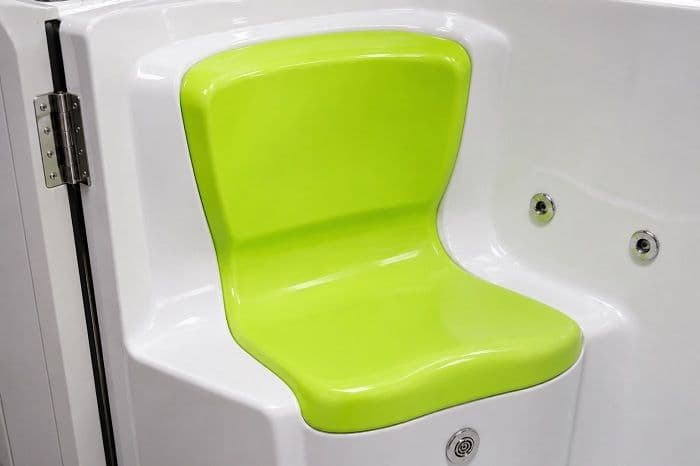
When people start looking at walk in bath options, they tend to focus on the door seal, the jets, or the overall dimensions. The seat is often the last thing they think about. That's a shame — because the seat is where you actually spend your entire bath, and its shape, material, and finish have more impact on comfort and relaxation than almost any other feature.
A flat, generic seat does the job. A contoured one is a different experience entirely — and once you've tried it, you'll understand why it's the detail that customers most often mention when they tell us how much they love their walk in bath and shower combination.
What a Contoured Seat Actually Does
A flat seat puts all of your body weight onto a small area at the base of the spine and the tops of your thighs. It feels fine for the first few minutes, but pressure builds quickly. Many people who own flat-seated walk in baths find themselves shifting position regularly, which defeats the whole point of a relaxing soak.
A contoured seat is shaped to follow the natural curves of the human body. The slight scoop at the centre distributes weight across a broader surface area, reducing pressure points at the base of the spine and under the thighs. The gentle rise at the rear provides lumbar support, so your lower back isn't left unsupported. The result is that you can sit comfortably for much longer — which means you can actually relax, let the warmth of the water work, and get the full benefit of features like hydrotherapy jets.
For anyone using a walk in bath for pain relief, muscle relaxation, or simply for the pleasure of a proper long soak, this distinction matters enormously. Ten comfortable minutes and thirty strained ones are not the same thing.
The Two Main Types of Contoured Walk In Bath Seat
Not all contoured seats are made the same way, and the material affects both how the seat feels and how well it holds up over time. In the walk in bath and shower market, you'll encounter two main options: acrylic and gel coat.
Acrylic Contoured Seats
Acrylic is the most widely used material in modern walk in bath manufacture, and for good reason. It is lightweight, strong, retains heat well, and — crucially for anyone with sensitive skin — it is hypoallergenic. Acrylic does not harbour bacteria in the way that some older materials can, and its smooth, non-porous surface means it won't cause irritation even with prolonged skin contact during a long soak.
This hypoallergenic quality is especially relevant for older users, people with eczema or psoriasis, or anyone whose skin is prone to reacting to rough or chemically treated surfaces. With an acrylic contoured seat in a walk shower bath, the surface that's in contact with your skin for the duration of your bath is one that actively won't cause problems — no redness, no irritation, no rough texture to aggravate sensitive areas.
Acrylic seats also warm up relatively quickly once the bath fills, which means you're not sitting on a cold surface while you wait for the temperature to stabilise — a small detail that makes a noticeable difference to the overall comfort of the experience.
Gel Coat Contoured Seats
Gel coat seats are typically found on fibreglass-reinforced walk in baths and offer a harder, denser finish. The gel coat layer provides a smooth, glossy surface that is resistant to scratching and staining, and it can be colour-matched very precisely during manufacture — making it a popular choice for customers who want a seamless, high-end aesthetic where the seat and the bath shell look and feel like a single unified piece.
Gel coat is also non-porous, which means it shares the hygienic advantages of acrylic — no bacteria harbouring in the surface, and no irritants leaching out over time. Where it differs is in feel: gel coat tends to be slightly firmer underfoot and under body, which some users prefer for the sense of solidity it provides.
How Modern Manufacturing Has Changed Seat Design
Ten or fifteen years ago, walk in bath seats were designed with fairly blunt tooling. The contours were approximate — shaped well enough to be an improvement over flat, but not precisely calibrated to human ergonomics. Today, that has changed significantly.
Computer-aided design and CNC manufacturing mean that seat profiles can now be designed using ergonomic data and then produced to tolerances measured in fractions of a millimetre. The curve of the lumbar support, the angle of the thigh rest, the depth of the central scoop — all of these can be refined iteratively during the design phase and then replicated with total consistency across every unit that comes off the production line.
This precision matters for comfort, but it also matters for aesthetics. Modern tooling allows manufacturers to create seats with smooth, flowing lines that integrate beautifully into the overall design of the bath. A walk in bath and shower unit today can look genuinely stylish — the kind of thing you'd want in your bathroom not just for its practicality, but because it looks considered and well-made. The contoured seat is part of that picture: it's no longer a utilitarian lump, but a carefully designed feature that enhances both the look and the feel of the product.
Longer, More Relaxing Baths — Not Just a Marketing Claim
It might sound like a small thing, but the ability to stay comfortably in a walk in bath for longer has real health implications. Warm water immersion helps with circulation, joint stiffness, and muscle tension. Hydrotherapy jets — if fitted — need time to do their work. The relaxation response, where your body genuinely lets go of tension, takes at least ten to fifteen minutes to kick in properly.
None of that happens if you're uncomfortable. A well-designed contoured seat removes the physical barrier to a long, genuinely restorative soak. It's the difference between a bath you tolerate and one you look forward to.
For anyone considering a walk in bath shower combination — whether for accessibility reasons, for health, or simply because they want a bathroom that genuinely improves their daily life — the seat is worth paying close attention to when you compare models. Ask about the material, ask about the contour profile, and if possible, sit in a demonstration unit before you decide.
What to Look For When Choosing
When comparing walk in bath models, here are the seat-related questions worth asking:
- Is the seat contoured, and what does the profile look like? Ask to see a cross-section or sit in a demo unit.
- What material is the seat made from — acrylic or gel coat? Both are good; acrylic is generally warmer to the touch and is a well-established hypoallergenic choice.
- Does the seat height work for you? It should allow your feet to rest comfortably on the bath floor without putting strain on your knees.
- Is the seat surface non-slip? Many quality walk shower bath models incorporate a textured non-slip zone on the seat for added safety.
The Seat Is the Centre of the Experience
A walk in bath is fundamentally a seated bathing experience. Every other feature — the jets, the door, the thermostatic controls, the overhead shower — exists around the seat. It makes sense to treat the seat as the starting point when you're evaluating your options, rather than an afterthought.
At Odyssey Baths, all of our walk in bath and shower units feature contoured seating designed with comfort and safety as the priority. If you'd like to discuss which model and seat type would suit you best, get in touch with our team for a no-obligation conversation, or request a brochure to explore the full range.
Written by Odyssey Experts
Our advice is based on years of experience helping UK families find safe bathing solutions. We ensure all our guides align with current UK regulations and industry best practices.